Circular Supply Chain to reconcile performance, resources and positive impact
The circular economy is an “economic system that uses a systemic approach to maintain a circular flow of resources by recovering, preserving or increasing their value, while contributing to sustainable development” (NF ISO 59004).
The circular supply chain is the essential operating backbone of circular business models.
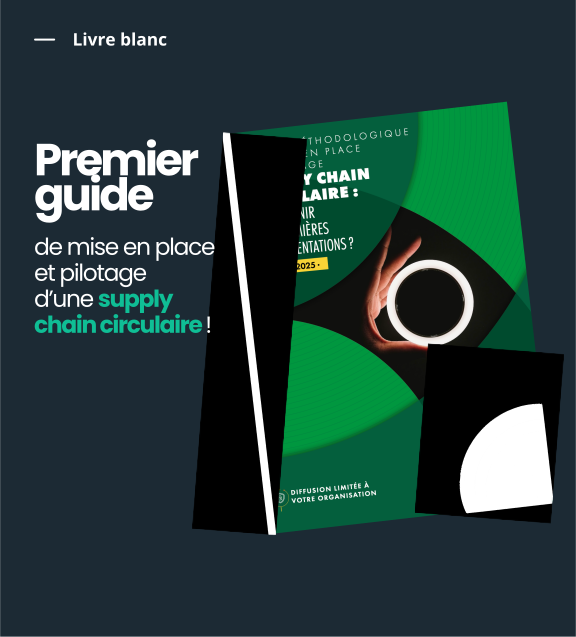
Our convictions
Adapt circular business models and value sharing
Different circular business models can be considered and coexist: repair, remanufacturing, second life, product‑as‑a‑service, leasing, subscription, etc.
It is essential to assess their feasibility, impacts, consistency and synergies with the company’s current business model.
A joint reflection on value sharing with all players in the chain is critical to maximize circularity and secure profitability.
Identify and size multi‑local networks
Designing the right network through a circular supply chain master plan that incorporates both industrial and logistics considerations is essential to scaling up.
A multi-local approach is not necessarily the most suitable solution for every business model or network. It is therefore critical to define the optimal target network.
Compared with a linear supply chain model, circular organisations and networks will require greater flexibility and more frequent adaptation. These adjustments must be made in close collaboration with all stakeholders across the value chain.
Adapt and evolve your steering model
The supply of materials and products, together with demand, must be coordinated across strategic, tactical, and operational planning horizons within the supply chain.
As circularity introduces new flows, existing performance indicators must be adapted and new ones developed to ensure effective management.
Managing product usage will become increasingly central, with the aim of reducing material costs.
Set up operational management including data and organizations
Defining the right level of traceability for your business, taking into account regulatory, quality, and economic requirements, will help maximise profitability and strengthen customer confidence.
The large volumes of data collected should be used and shared with all stakeholders across the value chain to support the continuous improvement of products and processes.
As with network design, your organisation will need to adapt and identify the most suitable operating model: centralised, decentralised, dedicated, or shared with the linear supply chain.
Our solutions
and expertise
Circular supply chain assessment
Assessment of processes, organisation and tools for your existing or future circular flows, from customer to supplier… and back!
Definition and refinement of the vision and key stakes around circularity through interviews, workshops and/or seminars.
Data collection, analysis and restitution to turn numbers into actionable insights.
Identification of your circular supply chain maturity and definition of a roadmap in line with the agreed vision and stakes.
Network sizing and viability of your circular model
Design and optimisation of circular loops (closed‑loop or open‑loop).
Multi‑local network design balancing cost, service, environmental impact and social impact.
Circularity steering design and deployment support
For each planning horizon, define the actions and adaptations required across all functions in the value chain—for example, implementing a circular S&OP process.
Define and develop circular performance dashboards and calculate the relevant KPIs.
Design new organisational models, including roles, responsibilities, and governance routines.
Provide change management support to drive the transformation.
Performance improvement of circular supply chain building blocks
Optimisation of reverse logistics, sorting, repair, refurbishment and remanufacturing operations.
Integration of circular flows into existing planning processes (forecasting, S&OP, etc.).
Digitalisation of circular activities
Design of data models and tools to track circular flows (returns, reuse, recycling, etc.).
Support for the selection and implementation of digital solutions dedicated to circular operations.
Training and serious games to raise awareness and engage your teams
We facilitate The Blue Connection – Circular Economy Business Game.
The Blue Connection engages participants in transforming a linear value chain into a circular one. Working with a virtual electric bicycle manufacturer, they implement a range of circular strategies, including maintenance and repair, reuse, remanufacturing, refurbishment, and recycling.
Our commitments and partnerships





Your gains
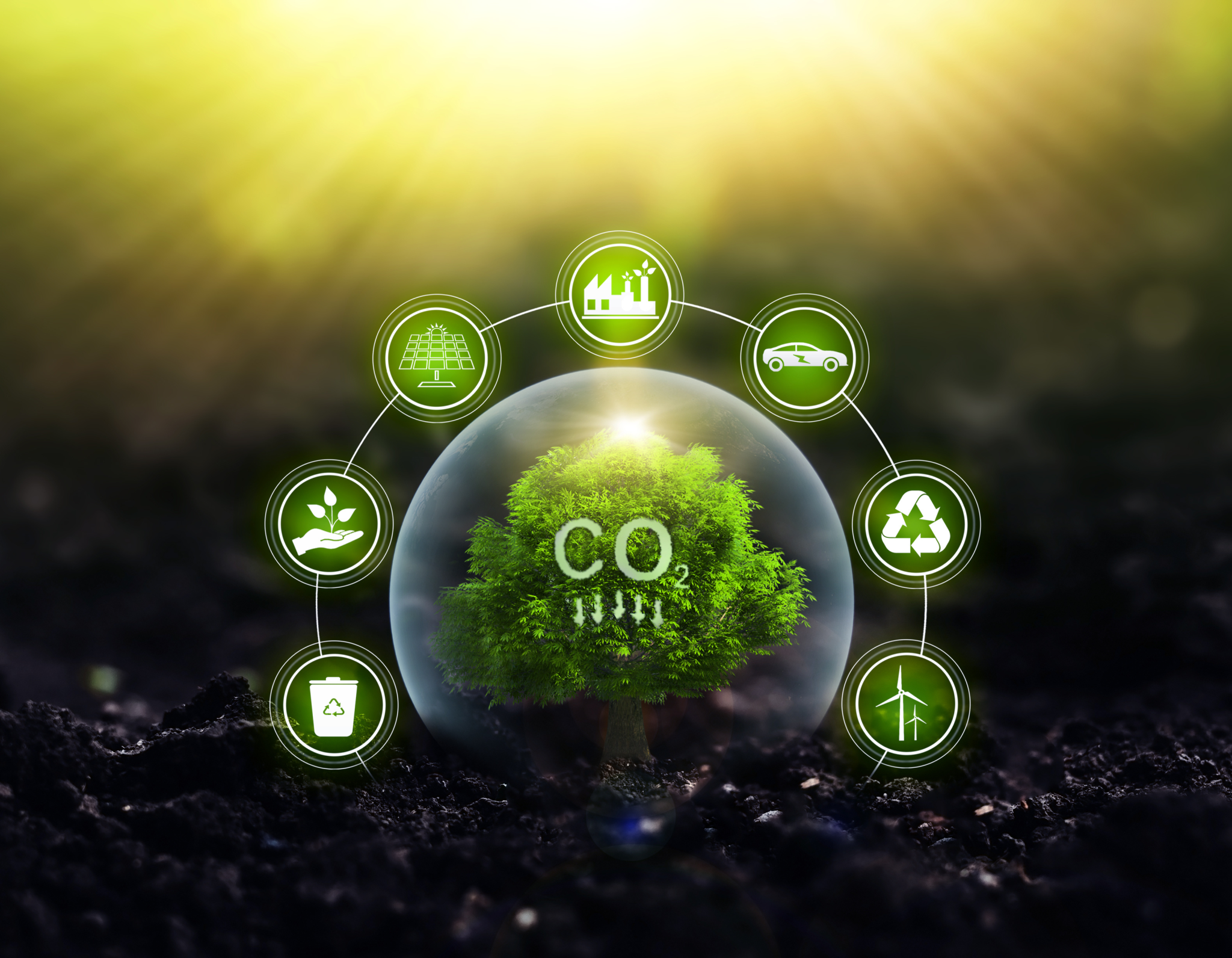
More sustainable activities
Increased utilisation rate and extended lifespan of products and materials.
Reduced material footprint and better waste recovery and valorisation.
Lower CO₂ / GHG emissions and improved material balance.

Cost optimisation and better steering
Reduced costs related to raw material and product use: purchasing, supply, storage and transformation.
Better management of circular operations: sorting, repair, remanufacturing.
Optimised reverse flows.

Customer satisfaction and compliance
Stronger loyalty and access to new customer segments looking for more responsible products.
Enhanced brand image.
Integration and valorisation of circularity in your CSRD reporting.

Positive impact on society
Creation of local jobs in repair, reuse and recycling value chains.
Mutualisation and creation of local synergies on material, energy and infrastructure flows to optimise resource use within a territory.
Contribution to reducing waste and limiting unreasonable resource consumption.


A projet ? Contact us
Partner
With more than 20 years of experience supporting industrial and retail companies, as well as local and regional authorities, Anaïs embodies Citwell’s combination of high standards and constructive support, ensuring that transformation initiatives remain consistent with sustainability and regenerative principles.
Her areas of expertise include raising awareness of key challenges, identifying opportunities to redesign business models and embrace circularity, leveraging regulations such as the CSRD and AGEC Act to initiate new strategies, and translating these ambitions into tangible changes across organisations, processes, performance measurement, and operations.
A recognised change facilitator, Anaïs supports both cultural and organisational transformation, as well as team capability building. She also works with executive committees, drawing on collective intelligence to guide decision-making and transformation.
Among our references

Scoping of a global reverse supply chain programme

Circular economy master plan and performance management for repair workshops
Acteur du textile
Definition of circular economy challenges and models,

Operational and tactical planning in a closed‑loop circular model.

Performance improvement of refurbishment workshops.

Support for the launch of refurbishment activities in Europe.