Aeronautics and Defence consulting for performance and resilience
Regaining speed without losing control: our solutions to meet the challenges of the Aerospace & Defence industry.
Cutting-edge technologies, small production runs, production ramp-up, international competition, and stringent quality and service requirements: the aerospace and defence sectors are undergoing profound transformation.

The challenges facing the sector
A wide range of heterogeneous players
- The sector’s giants (Airbus, Boeing…) set the pace for the entire production chain.
- Heavy dependence on first-tier engine and equipment manufacturers, who are structuring themselves and relying on many subcontractors and suppliers.
- Diamond structure that masks dependence on certain key players (raw materials, surface treatments, non-destructive testing, etc.)
- Economies of scale and multi-sourcing limited by the size of production runs
High value-added products
- Wide range of part numbers and extensive bill of materials levels; spare parts supply over several decades
- Long cycle times, from a few weeks to several years
- Quality, safety and traceability triad increasingly restrictive, but ensuring operational excellence
- Value of work-in-progress, which penalises small players in terms of working capital and makes production management more complex
- High R&D investment, required to stay in the race, combined with R&D outsourcing to suppliers
Strong growth in demand
- Necessity to be ready for the post-covid recovery that began in 2022, with strong demand
- Securing production rate increases will necessarily involve greater collaboration within supply chains, while ensuring good synchronisation.
A business in the midst of change
- Increased competition from emerging countries, with pressure on prices and innovation
- Refocusing and outsourcing strategies aiming to provide a complete service (design, industrialisation, manufacture and installation)
- The aftermarket has become as important as the new products market
- Technological breakthroughs underway (additive manufacturing, composites, etc.)
- Increased contractualization and penalty agreements (AOG)
Your challenges
and our solutions
Strengthening collaboration and a global supply chain vision
Harmonise and accelerate exchanges with your customers, plants and suppliers.
- Implement differentiated service policies tailored to your markets. Increase collaboration with suppliers.
- Synchronise programmes and sites around the extended S&OP loop (global and local S&OP, production and distribution master plans), and take full account of the propagation of the signal to the subcontracting network.
- Improve flow regulation by working on the propagation of MRP, or even the introduction of DDMRP. Better standardisation of planning practices to reduce the ‘bull whip effect’.
Product and service innovation
Accelerate the transformation of companies and the introduction of new products and services as a competitive advantage, requiring innovation consulting.
- Industry and Supply Chain 4.0: additive manufacturing, modular and connected factories, augmented reality, M2M, big data, etc.
- Data-driven management to better analyse the impact of disruptions on all BOMs and the search for associated solutions, to better regulate flows or even to simulate the impact of new technologies.
- Product Life Cycle Management, differentiated forecast management, launch/end-of-life management and product switches
Organisational agility
Adapt to the variability, flexibility and uncertainty of demand and customers
- Adapting flow management and stock policies to target service levels (pull/push flows, decoupling point, delayed differentiation, etc.)
- Improving the responsiveness and flexibility of industrial resources (shorter cycles, shorter lead times, adjustment of batch sizes, etc.)
- Back to basics on indicators for a tense supply chain: OTD and depth of delay
Among our
references

Industrial Planification

Supply Chain Transformation
Supply Chain Training
Logistics Network Design
Use Case Aeronautics
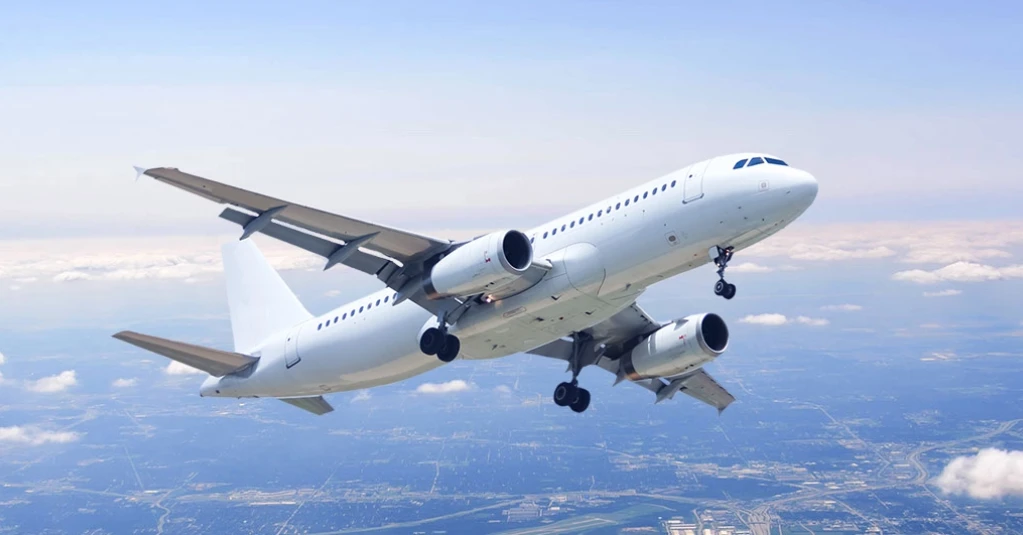
Industrial Planification
Our involvement
- Demand management: reception, analysis and completion of the customer demand signal over a period of up to 36 months
- Capacity management: development of the capacity management model in the SAP IBP tool
The results
Forecasting model for customer signal completeness construction and Unit and End-To-End tests completion
Capacity management model in SAP IBP construction and Unit and End-To-End tests completion
Support in building the new Demand Planning & S&Op organisation: governance, RACI, routines, business cards, deployment plan, etc.
Change management to help organisations become more mature so that the new processes and tools can be rolled out: diagnostics, workshops, action plan, etc.
Use Case Defence
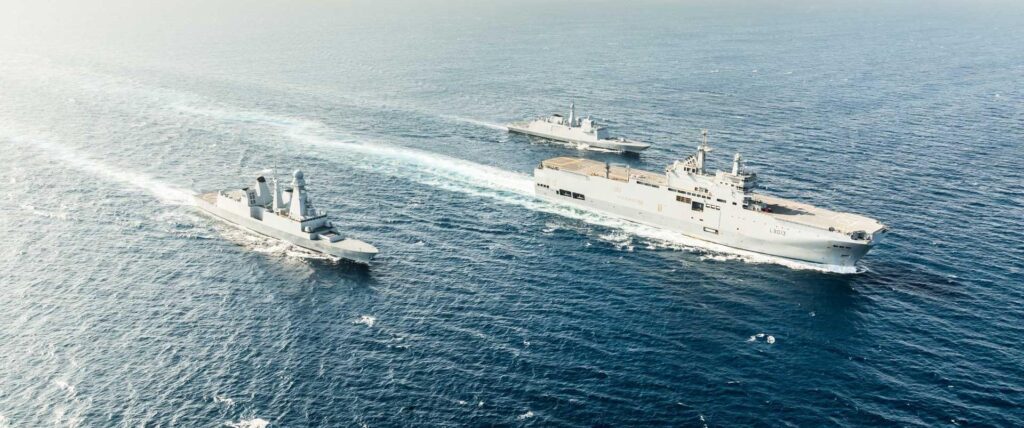
Logistics Master Plan
Our involvement
Needs analysis and projection of floor space needed over 15 years
Definition of a target operational organisation in terms of processes, flows and buildings
The results
Establishment of model for stock level evolution in the future by storage space and by constraints
Validation the site management board of an outsourced logistics organisation with a 3PL taking out a lease on 11,000m² and the construction of a new 9,000m² building on site


A Project ? Contact us
Patrner
Nicolas brings more than 20 years of experience across a wide range of industries, including aerospace and defence. As both a team manager and a consultant, he has led or contributed to numerous transformation projects, including team restructuring, ERP implementation, strategic planning, change management, and technical procurement and supply chain initiatives.
In operational leadership roles, he has designed multi-horizon planning models, including S&OP, which he now implements for major organisations alongside APS deployment projects. His aerospace background enables him to understand the challenges faced by both operational teams and senior management, while his expertise in change management allows him to support transformations at the appropriate level.