Logistics & Distribution performance for efficient, reliable and sustainable flows
Logistics is entering a new era. Between rapidly evolving customer expectations, the widespread adoption of new technologies, a sharp rise in environmental awareness, and pressure on resource availability and engagement, the challenges are huge and modernization initiatives are multiplying.
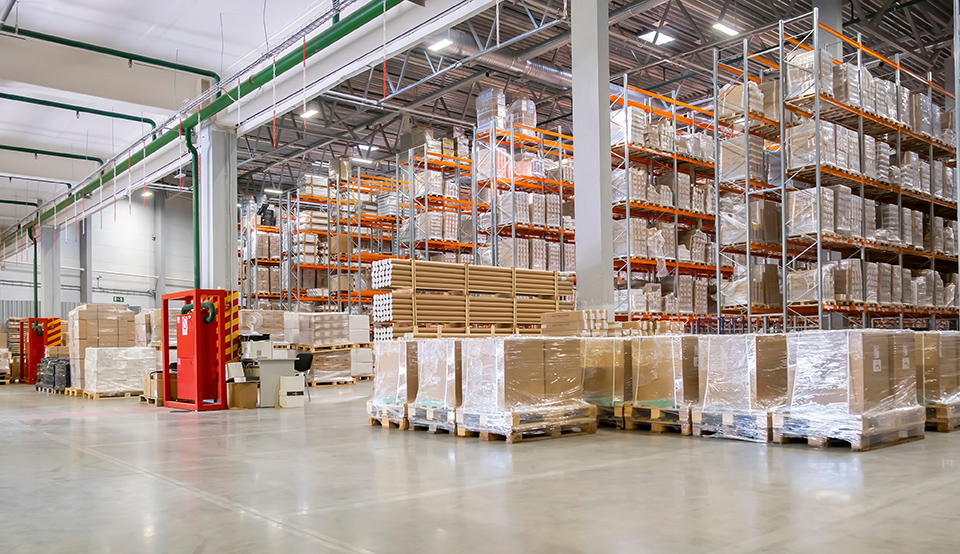
Which levers to optimize your logistics and distribution network?
Between technological developments, demanding customers, and financial constraints, companies must optimize their logistics and their distribution network, while limiting their carbon footprint.
Master omnichannel to better serve your customers
- Adapt to multiple preparation and distribution modes (physical stores, marketplaces, etc.).
- Manage returns flows (unsold products, warranties, breakage, recycling).
- Implement suitable processes and use management tools (OMS, POS, WMS, TMS) to control all logistics flows.
Decarbonize your logistics for a sustainable competitive advantage
- Implement HQE-certified warehouses.
- Develop decarbonized transport solutions.
- Redesign distribution and returns networks
Strike the right balance between service level and economic performance
- Strategically organize the distribution network.
- Find the right balance between service level, a real competitive advantage, and economic performance, which remains essential.
Leverage new technologies to revolutionize your distribution
- Transform and optimize distribution with the arrival of new technologies (AI, IoT, Big Data).
- Significantly optimize flows and costs through connected, adaptive warehouses and agile distribution networks coupled with intelligent calculation engines.
Reduce strain and improve working conditions in warehouses
- Reduce loads to be handled and repetitive tasks.
- Prevent musculoskeletal disorders, which have major social and financial impacts.
- Work on ergonomics and handling aids (robots, cobots).
5 tips to modernize your logistics and distribution
Measuring the current situation and identifying improvement areas and their relative weight makes it possible to define an ambitious and realistic trajectory.
Targeting high-impact actions rather than symbolic ones generates tangible gains that fuel the change dynamic.
- The solutions you implement must deliver real added value, not just be fashionable.
- Feasibility, real performance and robustness must guide your choices for your distribution.
- The solutions you implement must enable you to support your company’s strategy.
- Preparation and delivery times, distribution costs, customer services and internal/external ratios all need to be aligned with your business strategy and financial constraints.
- Having the right tools, whether hardware (mechanization, fleet, etc.) or IT (OMS, WMS, TMS/DMS), is a prerequisite for the performance of your business.
- The judicious use of new technologies (AI, Big Data, IoT) also brings major competitive advantages in many areas (route optimization, picking organization, omnichannel management, etc.).
- Converging with best practice, while retaining your own business specificities, enables you to move closer to the standards of market tools, thereby minimizing deployment costs and IT technical debt.
- These best practices also enable you to challenge the habits ingrained in your teams, which can be a source of non-performance.
Our solutions to accelerate logistics and distribution performance
You want to improve the performance of your distribution so you can better serve your customers, control costs, and respect the environment. Our expertise covers every link in the distribution chain.
Diagnosis and performance improvement
- Distribution diagnosis
- Omnichannel diagnostics
- Operational optimisation of warehouses
- Redefinition of organisations and processes
Design of flows and sites
- Definition of target transport flow diagrams
- Warehouse capacity optimization
- Network capacity optimization (shops, marketplace, etc.)
- Warehouse design
- Logistics and operational design of shops
- Operational implementation and change management
Modernization of your distribution tools
- Opportunity study, assistance with choice and implementation of OMS, WMS and TMS
- AI, Data Science and IoT for distribution
- Mechanization of warehouses
- Optimizing routes and filling
Decarbonization of distribution
- GHG assessment of physical flows
- Ecological transition of warehouses
- Decarbonization of transport
- Management of returns and the 2nd life of products
Selection and implementation of your partners
- Help in selecting and implementing 3PL
- Management of transport tenders (road, sea, air)

Boost your logistics performance with Citwell

Improve service quality and customer experience
Increase customer service level (OTIF, etc.).
Make lead times more reliable and shorter.
Improve customer experience.
Enrich your service offering.
Reduce errors and disputes.
Increase traceability.
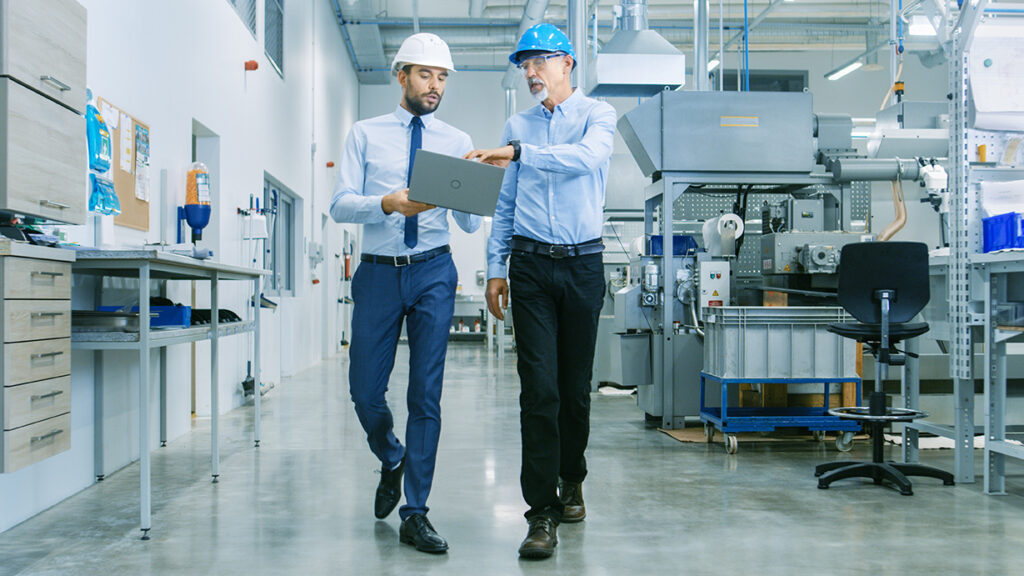
Gain operational performance across your entire distribution
Optimize storage and transport resources.
Improve team productivity.
Optimize logistics operating space.
Lower the carbon footprint.
Build more effective and smoother internal and external collaboration (other functions, service providers, …).

Achieve visible financial gains on your logistics costs
Clear reduction in internal and external costs.
Securing budgets and billing processes.
Reduction of inventory (on your sites and in transit) and working capital requirements.
Decrease in non-quality costs and disputes.


Contact our logistics and distribution consultants
Do you want to optimize your warehouses and reduce your logistics costs?
Are you looking to modernize and mechanize your logistics for greater operational efficiency?
Do you need support to choose and deploy your WMS, OMS, or TMS tools?
Partner
A graduate of INSA Lyon in Industrial Engineering, Maxence has worked in operational and project positions during his 20 years’ experience. He has held supply chain management positions with major logistics service providers as well as in industry, which has enabled him to lead major supply chain projects in a variety of contexts. Maxence is currently leading major supply chain transformation projects in a variety of business sectors.
Leverage our experience in logistics and distribution
Implementation omnichannel services

Redesign of transport modes
Transport schemes and TMS
Mechanization, WMS, and 3PL
Logistical implementation

Logistical and transportation optimization
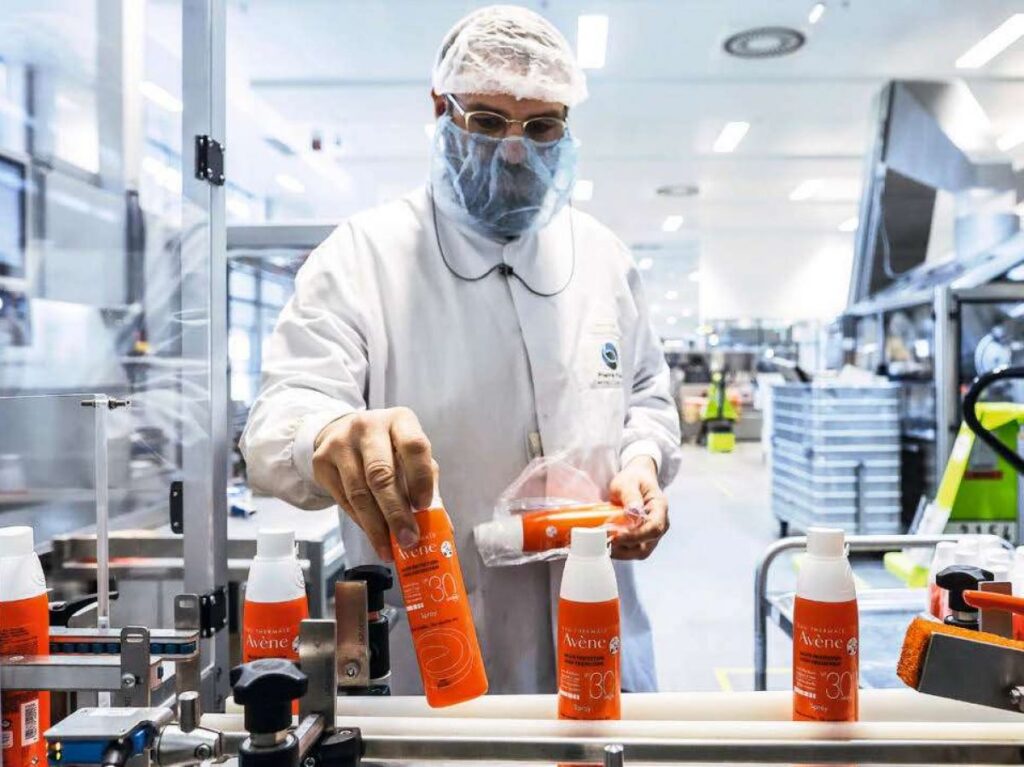

Pierre Fabre
Study of the mechanization of the group’s main distribution site
Our intervention
Projection of future site activity volumes by picking type and storage type
Identification, together with operational teams, of the areas and activities to be automated
Joint identification of the appropriate technologies and providers
Support in drafting the specifications leading to the automation tender process
Participation in project steering and facilitation of key phases of the consultation process
Analysis of suppliers’ proposals and support in selecting the most suitable solution
Les résultats
- A functional solution (or warehouse layout) addressing the warehouse growth challenges while integrating business and HSE constraints
- Compliance with the allocated budget thanks to the performance gains delivered by the selected technologies
- A selected solution capable of handling increased volumes
- A significant increase in site productivity


Groupe SEB
Roadmap for the consolidation of two WMF warehouses
Our intervention
Projection of target inventory levels in terms of pallet locations
Calculation of the merger impacts in FTEs, square meters, and equipment for each logistics activity
Mapping of impacts on other departments (planning, customer service, procurement)
Development of the 2-year roadmap
Preparation of the project P&L together with Prolog WMF’s controlling team
Detailed assessment of required and potential investments
Les résultats
Development of the 2-year roadmap and the associated investment plan
Highlighting the sensitivity of inventory levels on projected logistics costs
Detailed and accurate quantification of the expected warehouse logistics savings (15% annual savings at steady state)

« Citwell has enabled us to structure our logistics and network processes efficiently, simply, professionally and in line with our needs, all with a view to internationalising our sales and rationalising our industrial footprint. »
Emmanuel Carmier, SOMFY group Lean & Change directeur
« Citwell was a key player in our supply chain transformation plan. The company's ability to listen and respond, and its proactive understanding of our needs, provided real added value in this crucial project for the Bacacier group. »
Thomas Joly, manager Supply Chain Bacacier Group
« With Citwell’s support, we launched a project to reduce our transport-related CO₂ emissions in Asia. Their fresh perspective enabled us to challenge our existing practices and initiate a deep transformation. Their pragmatic and unbiased approach made it easier to identify improvement levers. Together, we built a clear roadmap and an actionable plan. »
Jérôme Menard, Supply Chain Director at LVMH Fragrance Brands
« Working with Citwell on Lean fundamentals enabled us to identify sources of waste, particularly in packaging and cleaning operations. As a result, packaging time was reduced from 25 to 10 minutes, and cleaning capacity was nearly doubled with the same staffing levels. We also optimized inventory turnover to accelerate product processing. »
Léa de Fierkowski, Co-founder and COO of Underdog
« We were looking for a company with both supply chain and transport experience and CSR expertise, which is what Citwell was able to offer and what made our choice in their favour. »
Sandra Arnaud, Sustainable developmnet and transport logistics manager

« Your support perfectly met our expectations. You were able to guide us clearly, without ever imposing your views. Deadlines were respected, and you demonstrated an excellent understanding of our processes. Finally, your integration within the business teams was extremely smooth, which greatly facilitated collaboration. »
Sophie Picory, Supply Chain Performance Manager at OLGA